THE MOMENT WE HAVE BEEN WORKING TOWARD
Watch the invitation.
Then help shape the answer.
A federal health agency is asking the public to help evaluate wireless-radiation exposure. RF Safe’s response is clear: bring the independent science into the record, investigate biological effects beyond heating, and make lower-exposure connectivity a practical choice.
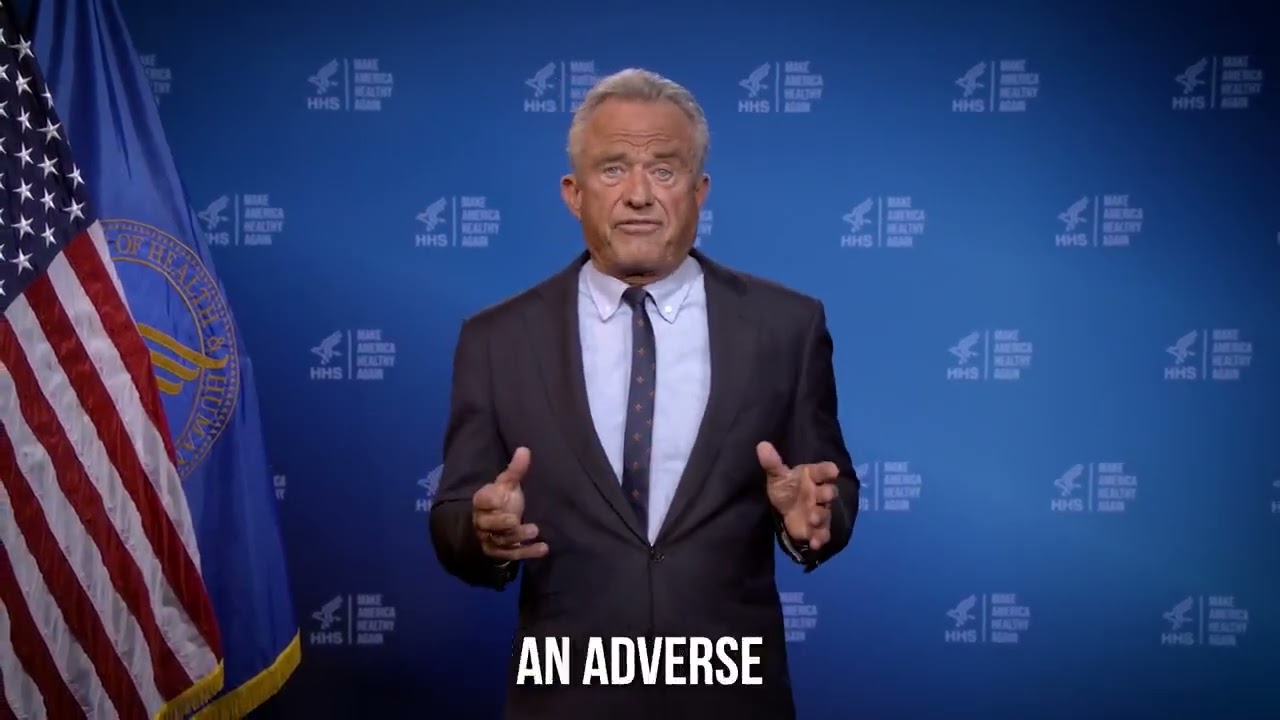
On September 21, 2026, Secretary Robert F. Kennedy Jr. released a new HHS video asking for research, exposure data, clinical observations and experiences of suspected adverse effects. Four days earlier, HHS had announced the initiative. Its published request now sets a concrete deadline: October 21, 2026. Read the final notice.
The invitation reaches people whose experiences rarely appear in regulatory summaries. Parents can describe concerns about their children’s environments. Clinicians can identify patterns that deserve investigation. Engineers can explain what exposure measurements miss. Researchers can put their strongest findings and proposed experiments directly before the agency.
FIRST: THE FEDERAL INVITATION
Kennedy asks for your evidence.
The HHS secretary’s September 21 announcement makes room for research, professional observations and the experiences of individuals and families.
Now meet the person asking what should happen next. On September 16, the day before HHS announced its initiative, RF Safe founder John Coates joined Freedom Hub to discuss federal responsibility, biological signaling and communication through light. His proposals give the public a practical agenda to bring to this opening.
NEXT: THE RF SAFE CASE FOR CHANGE
John Coates: put health into the design.
Explore Public Law 90-602, community authority, Li-Fi compatibility and the biological questions RF Safe wants federal research to answer.
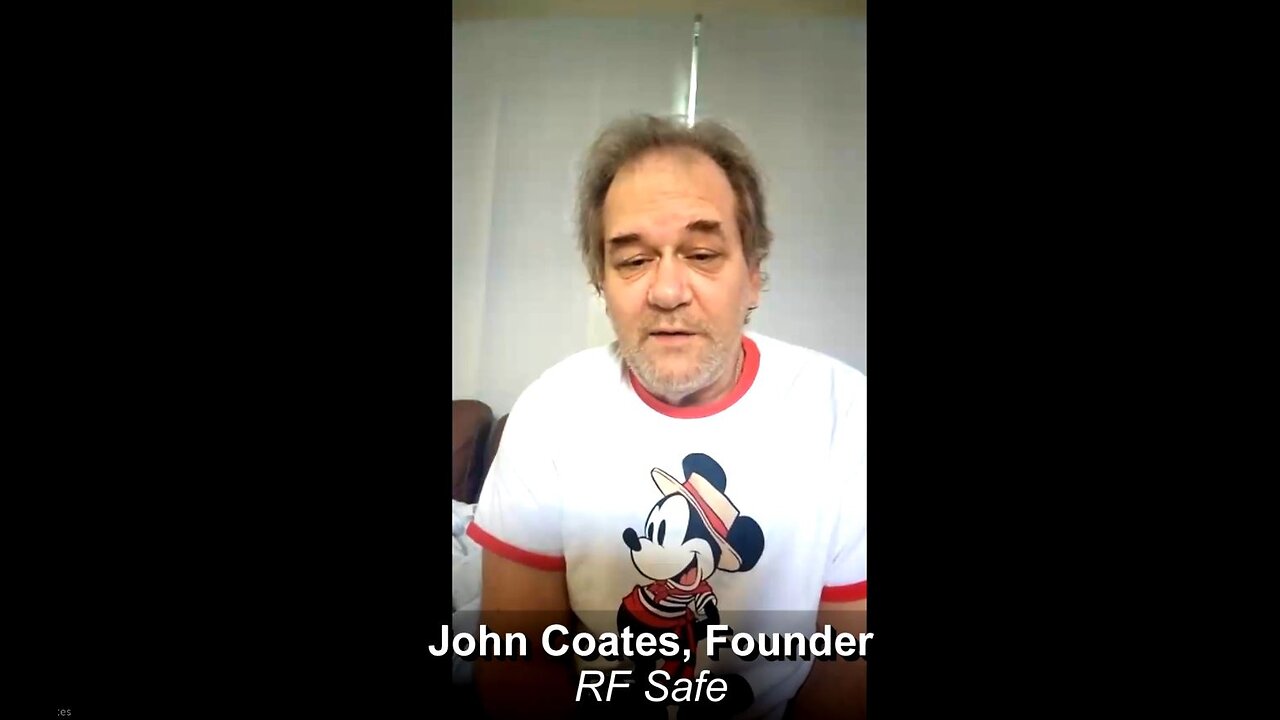
Select a preview to load its player. The videos play independently. Kennedy companion article · John Coates companion article
THE POSITION
Compliance must earn the public’s confidence.
RF Safe advocates a health-based reassessment of RF exposure limits and a funded transition toward lower-exposure infrastructure. The question is whether the standards adequately protect people across childhood, pregnancy, working life and decades of cumulative exposure. Compliance with a limit is meaningful only to the extent that the limit addresses the biological outcomes people need it to prevent.
Current RF limits rely heavily on protection against established effects associated with tissue heating. SAR measures the rate of energy absorption. That measurement is useful, but it does not itself describe every feature of an exposure or directly measure calcium signaling, oxidative injury, reproductive function or recovery. Our request is to evaluate those outcomes explicitly and explain the margin of protection for each.
The case rests on several connected bodies of evidence. NTP found malignant tumors in controlled animal experiments. Ramazzini reported a significant male heart-schwannoma finding in a different exposure arrangement. Human studies raise questions about intensive use, susceptible groups and exposure measurement. Mechanistic work supplies biological processes that can be measured and tested. These findings justify an accountable research and risk-assessment program.
Animal cancer
Clear evidence in NTP male rats; high-certainty endpoints in the 2025 systematic review.
Read the evidence ↓Reproductive health
A corrected high-certainty animal mating endpoint requires a substantive agency response.
Read the correction ↓Protection over time
A published risk assessment challenges the whole-body limit’s cancer and fertility margins.
Read the assessment ↓Bring the strongest findings into the record.
The NTP findings are an essential starting point. Its rat study identified clear evidence of malignant heart schwannomas and some evidence of malignant brain gliomas in males under the tested 900 MHz GSM/CDMA conditions. The government report gives the methods, doses and pathology findings needed for a serious assessment.
The WHO-commissioned animal-cancer review by Mevissen and colleagues rated increased glioma and malignant heart schwannoma in male rats as high-certainty endpoints. The Cordelli male-fertility correction raised the rating for reduced pregnancy rate after male exposure in animal mating studies to high. These are specific findings in experimental animals. They give health agencies concrete endpoints to assess, replicate and translate into protection.
Ronald Melnick and Joel Moskowitz’s 2026 assessment takes the next step: quantitative risk estimation. Using EPA benchmark-dose tools, low-dose extrapolation and conventional uncertainty factors, the authors estimate that the public whole-body limit of 80 mW/kg is 15–900 times higher than their modeled levels for an additional cancer risk of one in 100,000, and 8–24 times higher than their estimates for male reproductive protection.
Those comparisons depend on the selected endpoint, exposure duration and modeling assumptions; they are not a universal multiplier for every phone’s localized SAR. The policy demand is powerful and specific: independently reproduce the calculations and publicly explain whether the current limit provides an adequate margin.
HUMAN EVIDENCE & SURVEILLANCE
Ask what a study can actually rule out.
Human evidence deserves analysis by exposure, tumor type and duration. Choi and colleagues’ 2020 meta-analysis found a higher tumor-risk estimate in the cumulative-call-time category above 1,000 hours, although its overall regular-use comparison was not elevated. That difference is a reason to examine intensive-use categories carefully.
COSMOS cannot carry the entire reassurance argument. The published critique by Moskowitz and colleagues identifies weaknesses in baseline call-time exposure assessment, exposure changes during follow-up, reference-group comparisons, tumor ascertainment and statistical power. In the 2024 cohort report, the highest-call-time glioma estimate was 1.07, with a 95% confidence interval of 0.62–1.86. That interval includes both no association and a substantial increase; it cannot demonstrate equivalence. The authors’ response is part of the same published exchange.
The appropriate request is longer follow-up, better exposure measurement, and transparent estimates of the risks each analysis can exclude. A large enrollment alone cannot resolve sparse outcomes or misclassified exposure. RF Safe has long pressed the latency and study-design question.
Moskowitz’s SEER analysis also directs attention to categories obscured by a single malignant-brain-cancer total: non-malignant meningioma, thyroid and salivary-gland cancers, and age-specific glioblastoma trends. The NCI registry data are a reason to strengthen surveillance and investigate changing patterns with individual exposure histories, diagnostic practices and other risk factors. A registry trend cannot identify its own cause.
BIOLOGY HAS A TIME DIMENSION
Study the signal, the response and the recovery.
Cells use electrical gradients, calcium pulses and redox reactions to coordinate metabolism, gene regulation and repair. In foundational experiments, calcium-signal amplitude and duration, and oscillation frequency, changed downstream gene-regulatory responses. Biology is responsive to patterns.
Recent work offers direct experimental questions. Kim and colleagues’ 2026 Cell study identified CYB5B as an essential mediator in an engineered EMF-responsive gene switch whose activation depended on rhythmic calcium dynamics. A randomized, sham-controlled sleep study reported a CACNA1C-genotype-dependent shift in sleep-spindle frequency after 3.6 GHz exposure in 34 volunteers. One studies an engineered system; the other measures human physiology. Together they motivate exposure-specific research into timing and susceptibility.
The medical-device record matters too. FDA authorized TheraBionic P1 under a Humanitarian Device Exemption for selected adults with advanced liver cancer; it uses amplitude-modulated RF, and calcium-channel blockers appear among its contraindications. This is a serious example of purposeful RF–biology interaction under defined treatment conditions. Its probable benefit is not a safety test for ordinary wireless exposure, nor does it prove that another waveform is harmful. It supports studying the parameters that determine a response.
Why waveform deserves its own investigation
A GHz carrier can have a much slower amplitude envelope and burst schedule. The carrier, modulation, duty cycle, peak field, geometry and cumulative duration all help describe an exposure. A slow RF envelope is not physically identical to a separately applied 60 Hz field; biological detection of that envelope requires a coupling mechanism. Measure that mechanism and its consequences instead of assuming that carrier frequency alone settles the question.
RF Safe’s S4–Mito–Spin framework organizes three candidate routes: voltage-sensitive ion-channel gating, mitochondrial calcium/redox regulation, and spin-sensitive chemistry. The proposed consequence of persistent disruption is bioelectrical dissonance: signaling and recovery become less reliable. Low-fidelity biology describes that proposed loss of precision; a meta-disease state describes an upstream vulnerability that could interact with genetics, nutrition, pollution, sleep and other stressors.
In this hypothesis, the rare could become less rare and some failures could arrive earlier. These are predictions to test, not diagnoses established by the framework. The decisive experiments would track calcium timing, membrane potential, mitochondrial function, DNA damage and recovery before disease develops, using realistic exposure, blinded assessment and independent replication. Read RF Safe’s biological-timing explanation and cellular-feedback discussion.
Across harmful, mixed and beneficial reports, the responsible question is what produced the effect, whether it replicates, and when it becomes adverse. A beneficial response is evidence of responsiveness under its tested conditions. A mixed study may contain an important adverse endpoint. Neither should be collapsed into an unqualified “no effect” label—or counted as automatic proof of harm. The public needs the actual endpoints and exposure conditions.
Independence belongs in the methods.
Public confidence requires a review process that can scrutinize the assumptions behind existing guidelines. Huss and colleagues’ funding review found that exclusively industry-funded RF experiments were less likely to report a statistically significant effect. That is an empirical reason for transparent sponsorship analysis, alongside evaluation of study quality.
RF Safe asks HHS to disclose financial interests and standards-setting roles, include expertise beyond the organizations that wrote existing guidelines, publish protocols and evidence tables, and fund laboratories capable of independent replication. The aim is a process in which standards can be challenged by evidence and every substantive decision can be examined.
FROM EVIDENCE TO BETTER INFRASTRUCTURE
Give people a connection that reduces the burden.
John Coates’s practical challenge is compelling: when fiber brings information to a building, why assume the last few feet must always use RF? Ethernet and Power over Ethernet can support indoor access points. Compatible optical links can carry traffic across a room using light. Alexander Graham Bell and Sumner Tainter’s 1880 photophone demonstrated an early version of light-based communication; today, IEEE 802.11bb provides a modern light-communications standard.
RF Safe calls for phased, interoperable Li-Fi compatibility requirements, starting with public procurement and child-serving settings, alongside affordable adapters and wired alternatives. Pilot projects should measure actual RF reduction, reliability, accessibility and cost. Users should be able to identify and disable unnecessary radios while retaining a usable connection.
Optical equipment must meet wavelength-specific exposure and flicker requirements. Coates’s germicidal-light communications patent concerns a separate far-UVC application that requires its own spectral, dose and installation assessment. The policy goal is verified exposure reduction with suitable engineering standards.
Use existing duties. Change the laws that obstruct better policy.
Public Law 90-602 provides a statutory foundation. Its radiation-control duties, now codified in 21 U.S.C. § 360ii, include research, evaluation of exposure, performance standards and development of methods to reduce unnecessary electronic-product radiation. Ask Secretary Kennedy for a funded program, named agency responsibilities and published milestones.
Section 704 makes the adequacy of federal limits especially consequential. The provision now at 47 U.S.C. § 332(c)(7)(B)(iv) restricts state and local siting regulation based on environmental effects of RF emissions when facilities comply with FCC rules. RF Safe supports congressional revision or repeal of that restriction so communities can meaningfully address health and environmental evidence. Congress must change the statute; agency comments can document the reasons.
The Clean Aether Act of 2026 model statute develops RF Safe’s proposed policy direction. It is a legislative proposal, not enacted law. Bring it into comments as a request for evaluation, implementation planning and congressional consideration.
THE RF SAFE EVIDENCE GUIDE
18 entries.
Specific findings. Useful requests.
Every entry in the supplied featured collection appears here, organized for public comments. Publication types are identified so you can cite experiments, reviews, reports and emerging findings accurately.
Showing all 18 entries
NTP: clear evidence in male rats
Government animal experiment · 2018
NTP classified malignant heart schwannomas as clear evidence and malignant brain gliomas as some evidence of carcinogenic activity in male rats. The tested whole-body SARs were 1.5, 3 and 6 W/kg.
Use this in your comment +
Commission an independent health-risk assessment of the NTP tumor findings, with explicit animal-to-human dosimetry and duration assumptions.
HHS questions 5–6, 16–18
National Toxicology Program. Technical Report 595. 2018. Toxicology and carcinogenesis studies of 900 MHz GSM- and CDMA-modulated radiofrequency radiation in rats.
Ramazzini: a second heart-tumor signal
Lifetime animal experiment · 2018
Among 2,448 rats exposed to 1.8 GHz GSM far fields, malignant heart schwannomas increased significantly in males at 50 V/m. The reported female glioma increase was not statistically significant.
Use this in your comment +
Evaluate the concordant male heart-schwannoma findings across NTP and Ramazzini, while comparing their distinct field strengths, dosimetry and exposure schedules.
HHS questions 5–6, 15–16
Falcioni L, et al. Report of final results regarding brain and heart tumors in Sprague-Dawley rats exposed from prenatal life until natural death. Environmental Research. 2018. doi:10.1016/j.envres.2018.01.037.
Animal cancer: high-certainty endpoints
WHO-commissioned systematic review · 2025
The review included 52 studies and assigned high certainty to increased glioma and malignant heart schwannoma in male rats. Those endpoint-specific findings belong in the health assessment.
Use this in your comment +
Explicitly address the animal endpoints rated high certainty in Mevissen et al., including the correction, and publish the reasoning used to translate them into human-health protections.
HHS questions 5–6, 16–18
Mevissen M, et al. Effects of radiofrequency electromagnetic field exposure on cancer in laboratory animal studies, a systematic review. Environment International. 2025;199:109482. doi:10.1016/j.envint.2025.109482. See also the 2026 corrigendum, doi:10.1016/j.envint.2026.110368.
Male fertility: the corrected pregnancy finding
Systematic review + correction · 2024–2025
The correction raised certainty for reduced pregnancy rate in animal mating studies to high. This concerns pregnancy after exposure of males; it is not a high-certainty finding about all human pregnancy outcomes.
Use this in your comment +
Use the corrected male-fertility assessment and fund independently replicated, blinded reproductive studies with measured exposure and realistic use conditions.
HHS questions 5–6, 11–12, 16
Cordelli E, et al. Effects of RF-EMF exposure on male fertility. Environment International. 2024;185:108509. Corrigendum: 2025;199:109449. doi:10.1016/j.envint.2025.109449.
Melnick and Moskowitz: test the safety margin
Quantitative risk assessment · 2026
Using benchmark-dose modeling, low-dose extrapolation and uncertainty factors, the authors estimated protective whole-body levels below the 80 mW/kg public limit: differences of 15–900-fold for modeled cancer risk and 8–24-fold for male fertility, depending on assumptions and duration.
Use this in your comment +
Independently reproduce this risk assessment, disclose the dose-response and exposure-duration assumptions, and explain what cancer and reproductive risk the current whole-body limit is intended to protect against.
HHS questions 5–6, 16–17
Melnick RL, Moskowitz JM. Exposure limits to radiofrequency EMF do not account for cancer risk or reproductive toxicity assessed from data in experimental animals. Environmental Health. 2026;25:42. doi:10.1186/s12940-026-01288-6.
INTERPHONE: examine the highest-use group
Human case–control program · 2007 / 2010
The 2010 results reported a glioma odds ratio of 1.40 (95% CI 1.03–1.89) in the highest recalled call-time group, at least 1,640 hours. The authors identified recall and selection limitations. The collection’s 2007 paper describes the design; the numerical finding comes from 2010.
Use this in your comment +
Evaluate high-use and long-duration findings separately from ever-use comparisons, with explicit analysis of recall, selection and exposure misclassification.
HHS questions 5–6, 8, 16
Cardis E, et al. The INTERPHONE study: design, epidemiological methods, and description of the study population. 2007. PMID:17636416. INTERPHONE Study Group. Brain tumour risk in relation to mobile telephone use. International Journal of Epidemiology. 2010;39:675–694. doi:10.1093/ije/dyq079.
Compare the biology of the tumors
Tumor molecular characterization · 2024
Targeted sequencing examines the molecular characteristics of tumors from an RF exposure experiment and their relationship to human tumor biology. This extends interpretation of the tumors rather than supplying another independent exposure experiment.
Use this in your comment +
Fund molecular comparisons of exposed-animal tumors and human tumors to test biological relevance and identify informative mechanisms.
HHS questions 16–18
Genetic profiling of rat gliomas and cardiac schwannomas from life-time radiofrequency radiation exposure study using a targeted next-generation sequencing gene panel. PLOS ONE. 2024. doi:10.1371/journal.pone.0296699.
Pregnancy: improve prospective exposure data
Human observational cohort · 2025
The cohort reported associations involving self-reported communication-device use and selected pregnancy or birth outcomes, including miscarriage. Prospective studies with measured RF dose can address the limitations of self-report and confounding.
Use this in your comment +
Prioritize pregnancy cohorts with direct exposure measurement, prespecified outcomes and careful adjustment for other maternal and environmental factors.
HHS questions 8, 10–12, 16
Razavimoghadam M, et al. The association of widely used electromagnetic waves exposure and pregnancy and birth outcomes in Yazd women: a cohort study. BMC Pregnancy and Childbirth. 2025;25:427. doi:10.1186/s12884-025-07512-4.
Children need anatomically realistic testing
Computational dosimetry · 2018
Anatomical simulations found higher localized absorption in children’s brain and eye tissues for the modeled handset and virtual-reality configurations. The differences depend on anatomy, tissue and placement.
Use this in your comment +
Require transparent age-specific dosimetry and evaluate real-world proximity and simultaneous transmitters when reviewing compliance testing and protections for children.
HHS questions 5, 7–9, 11
Fernández C, et al. Absorption of wireless radiation in the child versus adult brain and eye from cell phone conversation or virtual reality. Environmental Research. 2018;167:694–699. doi:10.1016/j.envres.2018.05.013.
Oxidative effects deserve a direct response
Experimental-literature review · 2016
The review reported oxidative effects in 93 of 100 included studies and discussed reactive oxygen species, antioxidant defenses and oxidative DNA damage. The count describes this selected literature, not a pooled risk estimate.
Use this in your comment +
Evaluate the underlying oxidative-stress experiments by dosimetry, temperature control, blinding and replication, and fund time-resolved redox measurements under realistic RF waveforms.
HHS questions 6, 12, 16
Yakymenko I, et al. Oxidative mechanisms of biological activity of low-intensity radiofrequency radiation. Electromagnetic Biology and Medicine. 2016;35:186–202. doi:10.3109/15368378.2015.1043557.
Follow the redox pathway across systems
Scientific book chapter · 2022
This chapter develops the oxidative-stress argument across cellular pathways and exposure conditions. It is a synthesis of experiments, so a detailed technical comment should also cite the individual experiments most relevant to its claim.
Use this in your comment +
Study the relationship between exposure pattern, oxidative response and recovery, with preregistered endpoints and independent laboratory replication.
HHS questions 6, 12, 16
Yakymenko I, Tsybulin O. Oxidative Stress Induced by Wireless Communication Electromagnetic Fields. In: Electromagnetic Fields of Wireless Communications: Biological and Health Effects. CRC Press. Published 2022, copyright 2023. doi:10.1201/9781003201052-6.
Ion channels as a testable coupling pathway
Mechanistic synthesis · 2025
The authors propose ion-driven voltage-gated channel dysfunction as a route from structured fields to altered ionic balance and oxidative stress. This supplies a mechanism to test with exposure-specific measurements.
Use this in your comment +
Test channel-gating predictions using measured fields, appropriate sham and temperature controls, channel perturbations, and downstream calcium and mitochondrial measurements.
HHS questions 5, 12, 16
Panagopoulos DJ, Yakymenko I, De Iuliis GN, Chrousos GP. A comprehensive mechanism of biological and health effects of anthropogenic extremely low frequency and wireless communication electromagnetic fields. Frontiers in Public Health. 2025;13:1585441. doi:10.3389/fpubh.2025.1585441.
RF research: sponsorship is measurable
Systematic review of sponsorship · 2007
Across 59 experimental studies, exclusively industry-funded studies were less likely to report a statistically significant effect than publicly or charity-funded studies. The association persisted in adjusted analyses.
Use this in your comment +
Require disclosure of funding and standards-setting roles, preregistration, accessible data and independent replication in the federal evidence program.
HHS questions 5, 16–17
Huss A, et al. Source of funding and results of studies of health effects of mobile phone use: systematic review of experimental studies. Environmental Health Perspectives. 2007;115:1–4. doi:10.1289/ehp.9149.
Research independence across the EMF field
ELF evidence and funding review · 2019
This review examines funding patterns and cancer findings for power-frequency magnetic fields. Its exposures are ELF, principally 50–60 Hz, rather than a direct test of cellphone RF.
Use this in your comment +
Evaluate sponsorship and methodological choices transparently across the EMF literature while keeping ELF and RF exposure categories distinct.
HHS questions 5, 16–18
Carpenter DO. Extremely low frequency electromagnetic fields and cancer: How source of funding affects results. Environmental Research. 2019;178:108688. doi:10.1016/j.envres.2019.108688.
From fragmented oversight to accountability
Peer-reviewed policy review · 2025
The review assembles the history of U.S. RF policy and proposes stronger independent research, surveillance, compliance testing and protections for vulnerable groups.
Use this in your comment +
Publish an interagency plan with responsible offices, research budgets, exposure-monitoring commitments and a public timetable for reviewing health-based protections.
HHS questions 5, 9–11, 16–17
Scarato T. U.S. policy on wireless technologies and public health protection: regulatory gaps and proposed reforms. Frontiers in Public Health. 2025;13:1677583. doi:10.3389/fpubh.2025.1677583.
The environment belongs in the record
Ecosystem and policy review · 2025
The review examines nonhuman species and ecological pathways, extending the inquiry beyond human tissue-heating benchmarks to species-specific exposure and response.
Use this in your comment +
Fund ecological exposure assessment and replicated studies of sensitive species, and explain how wireless-infrastructure decisions evaluate environmental effects.
HHS questions 14–17
Flora and fauna: how nonhuman species interact with natural and man-made EMF at ecosystem levels and public policy recommendations. Frontiers in Public Health. 2025;13:1693873. doi:10.3389/fpubh.2025.1693873.
Track tumor types, not just a pooled total
Cancer-registry report · 2023 data
The report supplies population incidence data for examining age, tumor category and change over time. Registry surveillance and individual RF-exposure studies answer different questions.
Use this in your comment +
Support histology-specific and age-specific cancer surveillance linked, where feasible, to reliable exposure histories and diagnostic and registration changes.
HHS questions 10, 16–17
Danish Health Data Authority. Nye kræfttilfælde i Danmark 2023. Cancer Registry report. Copy linked by RF Safe.
Body placement: a hypothesis for follow-up
Preliminary conference abstract · 2024
The pilot abstract raises a question about habitual phone carrying and early-onset colorectal cancer. Its preliminary status calls for full reporting and replication before treating the association as an established risk estimate.
Use this in your comment +
Collect device placement, transmission activity and duration in exposure cohorts, and investigate the pilot finding through adequately powered, independently replicated studies.
HHS questions 8–10, 16
Li DK, et al. Is Cellphone Carrying Below the Waist (Exposure to Non-Ionizing Radiation) Contributing to the Rapid Rise in Early-Onset Colorectal Cancer? ISEE Conference Abstracts. 2024. doi:10.1289/isee.2024.1903.
Collection numbers preserve the original featured-list order. This is RF Safe’s selected advocacy reading guide, not an exhaustive systematic review. The INTERPHONE results are linked alongside the collection’s design paper; corrections are linked where identified. Download the source guide (JSON).
FIND YOUR PLACE IN THE HHS REQUEST
You can answer the questions you know.
The final notice has an instruction numbered 1 and 17 substantive questions, numbered 2–18. Identify the numbers you address. This compact map helps you choose; the official notice supplies the complete wording.
Explore all 17 HHS questions +
| Question | Topic | Your contribution |
|---|---|---|
| 2 | Your perspective | Explain your role and interest. |
| 3 | Personal experiences | Describe timing, symptoms, sources and exposure changes. |
| 4 | Professional observations | Report patterns and assessment methods. |
| 5 | Standards and exposure | Discuss limits, waveform, duration and reduction methods. |
| 6 | Existing limits | Identify evidence relevant to health protection. |
| 7 | Measurement | Describe available exposure methods. |
| 8 | Real-world assessment | Explain measurement improvements. |
| 9 | Disclosure | Recommend information the public needs. |
| 10 | Surveillance | Propose registries, monitoring and reporting. |
| 11 | Sensitive populations | Address children, pregnancy and other susceptibilities. |
| 12 | Below-limit effects | Cite specific exposures and adverse endpoints. |
| 13 | Cumulative exposure | Discuss changing technologies and combined sources. |
| 14 | Environmental effects | Provide species and ecosystem evidence. |
| 15 | Infrastructure | Address siting, density and neighborhood exposure. |
| 16 | Research priorities | Propose decisive studies. |
| 17 | Agency coordination | Specify FDA, NIH and CDC responsibilities. |
| 18 | Additional information | Add relevant evidence or recommendations. |
If you believe an exposure affected your health, HHS is asking to hear from you. Explain the source, approximate timing, duration, what you noticed and what changed when exposure changed. Identify measurements and professional observations separately from estimates. Keep the account truthful and avoid private medical records or children’s identifying details.
PUT YOUR VOICE ON THE RECORD
Two agencies.
Two submissions.
A social post can start a conversation. An agency submission puts your evidence and requested action into the federal record.
Submit by October 21, 2026.
HHS-OASH-2026-0397
Choose the questions relevant to your experience and evidence. Request independent research, health-based assessment, transparent monitoring and lower-exposure alternatives.
- Prepare one response, with question numbers and source links.
- Open the docket and select its RFI’s Comment option.
- Review, submit and save your confirmation.
Address the remand directly.
ET Docket 13-84 · DA 26-997
Focus on non-cancer effects, children, long-term exposure, device-testing procedures and environmental impacts. The current notice limits comments to the remanded issues.
- Prepare a document tied to those issues and supporting sources.
- Open Standard Filing; enter 13-84 and select COMMENT.
- Attach, review and submit. Save the confirmation.
HHS closes October 21. The FCC notice sets its deadline 30 days after Federal Register publication; a calendar date was not confirmed for this page. Check the FCC record before filing. A comment to one agency does not enter the other record. These are public submissions.
MAKE YOUR COMMENT SPECIFIC
Start with a source. End with a request.
Use the existing RF Safe worksheet to assemble and edit your response. Choose HHS or FCC, adapt the language to your own views, and file through the official portal.
A short HHS opening you can adapt +
I am submitting this response to HHS-OASH-2026-0397 regarding questions 5, 11, 12, 16 and 17. I support an independent, health-based reassessment of RF exposure protections, with particular attention to children, reproductive health and long-term exposure. Please evaluate the cited experimental findings and their corrections, fund rigorous research on biological responses beyond heating, publish an interagency research plan under the electronic-product radiation-control program, and evaluate wired and Li-Fi alternatives that reduce unnecessary RF exposure. My specific evidence, experience and recommendations follow.
A short FCC opening you can adapt +
Re: ET Docket No. 13-84; DA 26-997. I request a reasoned, evidence-specific response to the remanded questions concerning non-cancer effects, children, long-term exposure, device compliance testing and environmental impacts. Please address the studies cited below, explain whether the tested conditions are relevant to current limits, identify gaps in protection and specify the research or testing changes needed to resolve them. My concern is the adequacy of the protection provided in actual use, including cumulative exposure and potentially susceptible populations.
These openings are suggestions, not complete submissions. Add the evidence and requests that matter to you. HHS permits anonymous responses and asks each person or organization for one response.
BEFORE YOU FILE
Four practical answers.
Do I have to prove that RF caused my symptoms?+
No. HHS invites experiences of suspected adverse effects. Describe what happened and the basis for your belief accurately; observations can help identify questions for investigation.
Do I need to answer every HHS question?+
No. You may answer one or more relevant questions. Include their numbers, your perspective, evidence links and the action you want HHS to take.
Can I send the same comment to both agencies?+
Submit separately and adapt the emphasis. HHS has a broad health and research RFI. The FCC notice concerns specified issues from the 2021 court remand; match your FCC submission to that scope.
Where do I find the source documents and policy proposals?+
Use the source guide above, the RF Safe featured collection, the Clean Aether Act model statute and the Non-Thermal EMF Mechanisms Science Supplement. The supplements present RF Safe’s advocacy and proposed research framework; individual scientific claims should be supported by the original studies.
THIS IS YOUR OPPORTUNITY
The record will reflect
the people who respond.
Read a source. Write a specific request. Submit your comment. Then help someone else do the same. Children will inherit the communications infrastructure we build—and the protections we choose to demand.
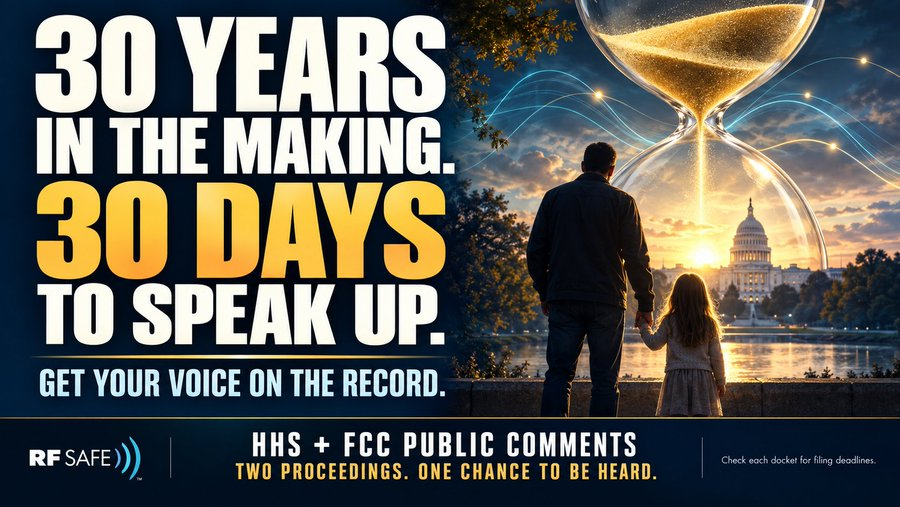
30 years in the making. 30 days to speak up.
The slogan refers to the HHS September 21–October 21 comment window; FCC dates are separate.